
U.S. Bank Stadium Guide
Plan your visit: seats, parking and where the chant hits loudest on game day.
Read more → GB
•
GB
•
 MIN
Sun 3:25 PM CDT
MIN
Sun 3:25 PM CDT
 NE 10
•
NE 10
•
 SEA 13
Final
SEA 13
Final
 SF 27
•
SF 27
•
 LAR 7
Final
LAR 7
Final
 TB
•
TB
•
 CIN
Sun 12:00 PM CDT
CIN
Sun 12:00 PM CDT
 NO
•
NO
•
 DET
Sun 12:00 PM CDT
DET
Sun 12:00 PM CDT
No games to show right now. See the schedule.

A rallying cry. A community. A uniquely Vikings tradition. “Skol” is more than a word — it is a genuine Scandinavian toast that Minnesota turned into the arm-raising chant fans perform together at U.S. Bank Stadium.
The StorySkol at a Glance
Sources are cited throughout this page, including Wikipedia's entries on Skål, Skol, Vikings, Viking thunder clap and Gjallarhorn.
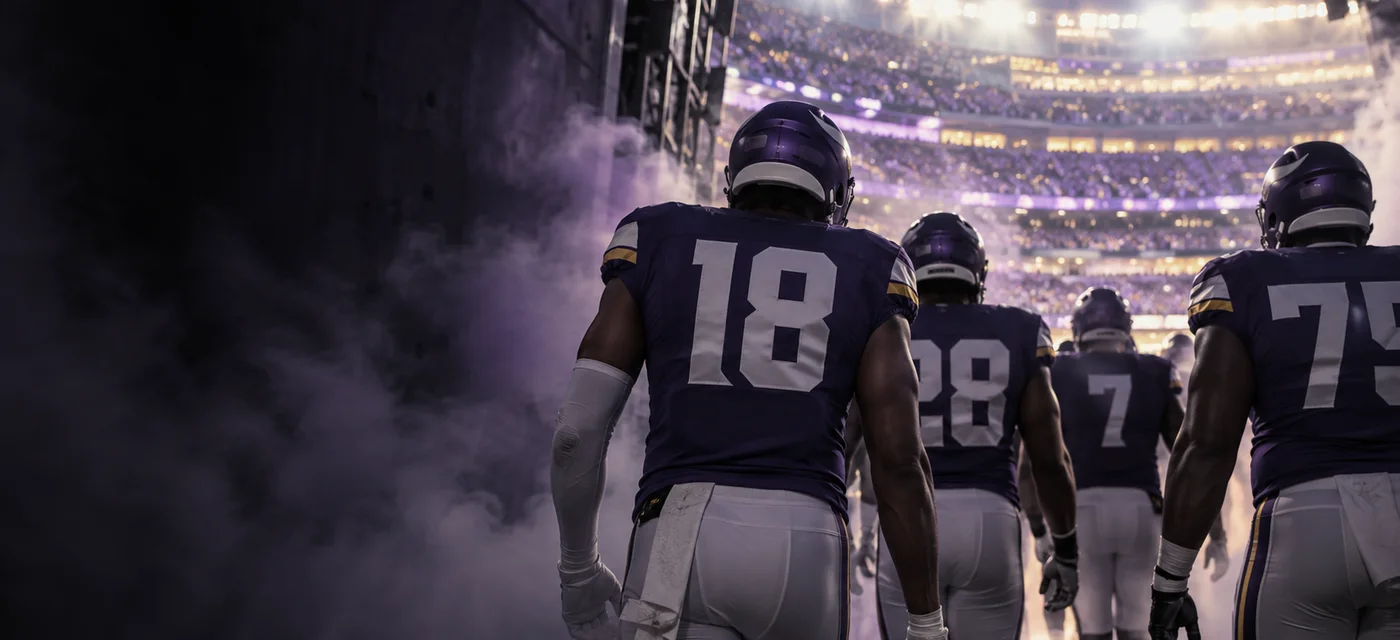
If you have ever been to a Minnesota Vikings home game, you already know the moment: thousands of arms shoot into the air, a chant builds around the bowl of U.S. Bank Stadium, and the building erupts into a single word — SKOL.
It looks like a made-up football cheer, but it is not. “Skol” is a real, centuries-old Scandinavian word that Minnesota's Nordic-named franchise has used since its founding, and that its fans reshaped into one of the NFL's most recognizable game-day rituals. This guide covers where the word actually comes from, how the modern chant works, and how the tradition grew into what it is today.
The Skol Chant
The chant is a simple, repeatable call and response that unites fans inside the stadium and watching at home.
Fans raise both arms straight overhead, section by section, as the chant starts to spread around the bowl.
With arms still raised, the crowd claps and calls “SKOL” together in rhythm, gathering pace and volume.
The cycle repeats and builds, often timed to key moments in the game, until it breaks into one unified shout.
“Skol” is the English spelling of skål, a word shared by Swedish, Danish and Norwegian (Icelandic uses the related skál) that is offered as a toast, roughly equivalent to “cheers.” The word traces back to Old Norse, where it originally referred to the bowl-shaped drinking vessels used in Scandinavian communal toasts — over time, the name for the vessel became the toast itself.
The Vikings have used the anglicized “Skol” since close to the franchise's founding. “Skol, Vikings,” the team's official fight song, was written by Edina, Minnesota composer James “Red” McLeod around 1961 and uses “Skol” as its rallying cheer — a direct nod to the Scandinavian heritage of the many Minnesotans whose ancestors settled the state. It still plays after Vikings scores and home wins.
Decades later, fans repurposed that same word as the word for a very different, physical ritual: the arm-raising chant now heard at every home game. In that sense, “Skol” is a celebration, a show of support and a symbol of unity for Vikings fans — the same spirit as the original toast, aimed at a football team instead of a raised glass.
Sources: Wikipedia, “Skål”, and Wikipedia, “Skol, Vikings”.
This independent site does not have a licensed recording of the chant to play, so here is what it sounds like in words: a slow, deliberate hand clap that starts small in one corner of U.S. Bank Stadium, spreads section by section as more voices join the count, and gathers speed until it breaks into a single, sustained shout of “SKOL!”
Separately, Vikings home games also feature the sounding of the Gjallarhorn, a large ceremonial horn blown during the pregame opening ceremony alongside the fight song — another piece of the Norse theme that gives “Skol” its roots.
Viktor the Viking, the team's official mascot since 2007, helps bring the Skol spirit to life on the sideline at U.S. Bank Stadium, rallying fans of all ages into the chant.
About Viktor the VikingFrom the team's fight song to a stadium-wide chant, here is the real, dated timeline of how “Skol” became part of Vikings culture.
The Minnesota Vikings join the NFL. Around the same time, composer James “Red” McLeod of Edina writes “Skol, Vikings,” the team's official fight song, built around the Scandinavian cheer.
The Vikings open U.S. Bank Stadium. Fans introduce the organized Skol chant, adapting the arm-raising, rhythmic clap that Iceland's national football team supporters had popularized worldwide that year during UEFA Euro 2016.
In the January 2018 playoff win over New Orleans known as the “Minneapolis Miracle,” quarterback Case Keenum leads the stadium in the Skol clap and chant moments after the game-winning touchdown — after Saints coach Sean Payton had mocked the chant on the sideline just before the play.
The Skol chant remains a fixture of every Vikings home game at U.S. Bank Stadium, alongside the sounding of the Gjallarhorn and the “Skol, Vikings” fight song.
Sources: Wikipedia entries for Skol, Vikings, Viking thunder clap, Minneapolis Miracle and Gjallarhorn.
Skol is the anglicized spelling of skål, a Scandinavian word shared by Swedish, Danish and Norwegian that is used as a toast, roughly meaning “cheers.” The Vikings adopted it as a rallying cheer that nods to Minnesota's Nordic heritage.
The word has been part of the team since 1961 through its fight song, “Skol, Vikings.” The arm-raising, rhythmic Skol chant fans do today took shape in 2016, when the team opened U.S. Bank Stadium and fans adapted the clap chant popularized that year by Iceland's national football team supporters.
Yes. Skål is a genuine word used across Scandinavian languages as a toast, tracing back to an Old Norse word for a drinking bowl. “Skol” is simply the English-spelling version the Vikings use.
Plan your visit: seats, parking and where the chant hits loudest on game day.
Read more →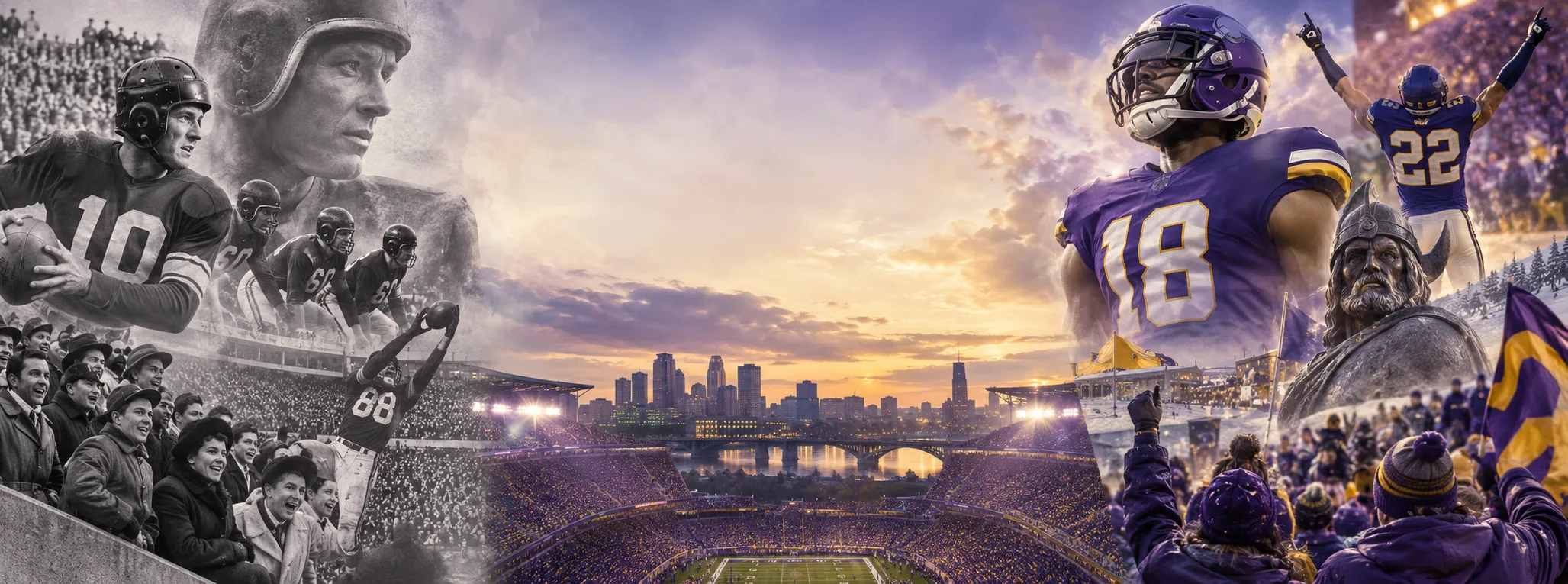


The real story behind Viktor the Viking and the sideline energy at U.S. Bank Stadium.
Read more →