




News / Rookies
RookiesRookie Watch: Evaluating Demond Claiborne’s Vikings Role
The confirmed draft background and the on-field questions to follow as his professional role develops.
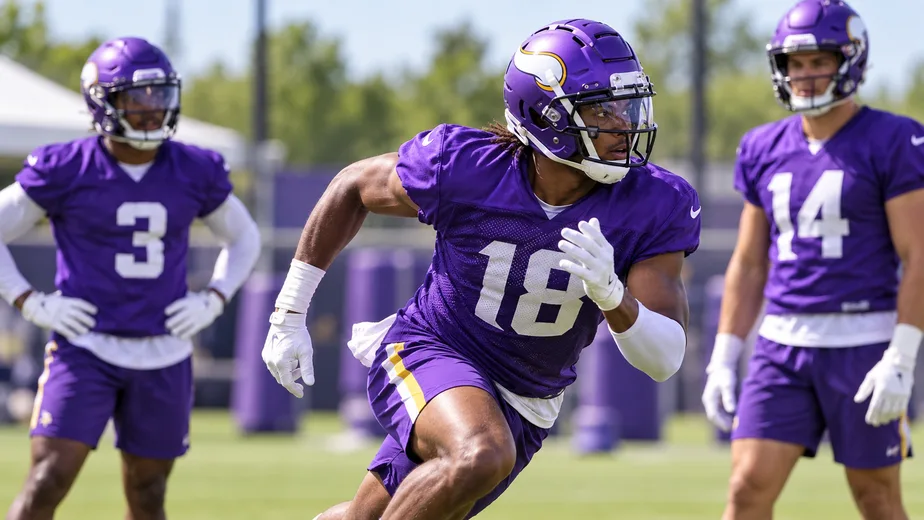
Demond Claiborne’s rookie season with the Vikings starts in a crowded and changing running back room. This guide lays out what is confirmed about his background, what Week 1 showed about the backfield, and the specific signals that will show whether his role is growing.
Minnesota selected Wake Forest running back Demond Claiborne with pick 198 in the 2026 draft. The official draft announcement provides his college background. His team profile is the reference for current roster information.
Where the Vikings running back room stands
In the 39-22 Week 1 win over Green Bay, the carries went to two veterans. Jordan Mason had 15 carries for 59 yards and a touchdown, and Aaron Jones Sr. had 12 for 40 and a touchdown. DeeJay Dallas caught one pass for one yard. Claiborne does not appear in ESPN’s Week 1 box score, so there are no game statistics to report for him yet.
The picture may already be shifting. ESPN’s injury listing, updated September 16, shows Mason on injured reserve with a thumb injury. That changes the room, but it does not by itself say who takes his carries, and this article makes no forecast of Claiborne’s workload. The Vikings running backs guide and the injury report are the places to check as the week develops.
Separate opportunity from projection
Draft position does not determine weekly touches. Follow active status, offensive snaps, carries, targets and special-teams usage before describing a settled role. Injuries and game situations can change the distribution from week to week.
How late-round rookie backs usually earn a role
For a running back drafted outside the early rounds, the path to playing time rarely starts with carries. It usually starts on game day with being active at all, and that often depends on special teams: covering kicks and punts, blocking on returns, or returning kicks himself. A back who helps in those phases gives coaches a reason to keep him in uniform.
Offensive trust follows a different order. Ball security comes first, because a fumble can cost a young player his spot quickly. Pass protection comes next: a back who cannot identify and pick up a blitzer is hard to use on passing downs, however well he runs. Only then do situational packages, such as a few carries in a series or a specific third-down role, tend to appear.
In Week 1, Myles Price handled all five of Minnesota’s kickoff returns for 179 yards and the team’s only punt return, so the return job had a clear owner in the opener.
Three things to watch
On running plays, follow how he approaches the blocking and responds when the intended lane closes. On passing downs, watch the protection responsibility and route execution. On special teams, track whether he receives opportunities and how consistently he handles them.
These are evaluation questions, not reports of unseen practice performance or a forecast of a particular workload. Use the depth chart and dated game records to assess how the role develops.
Reading the signals week to week
A rookie’s role usually shows up in the data before it shows up in headlines. The inactive list, released about 90 minutes before kickoff, answers the first question. Snap counts after the game show whether he played on offense, special teams or both. The box score then shows carries and targets, and the play-by-play shows the situations: early downs, third downs, short yardage or late in a settled game.
One game rarely defines a role. A back who gets a handful of carries in the fourth quarter of a lopsided game is in a different position from one who is trusted on third down in a close one.
Demond Claiborne: what to watch at Chicago in Week 2
The Vikings visit the Bears at Soldier Field on Sunday, September 20. Chicago opened its season with a 59-37 win over Carolina. For Claiborne, the checklist is straightforward: whether he is active, which phases he plays in, and, if he gets touches, the down and distance when they come. With the backfield in flux after Mason’s move to injured reserve, those details will say more about his rookie role than any preseason projection.
Updated September 16, 2026, with Week 1 context. Editorial explainer by Minnesota Vikings IO. Game statistics come from ESPN’s Week 1 box score and play-by-play; coverage calls, assignments and snap counts are not recorded there and are not claimed here.